Early Addition for Preschoolers: From Counting Objects to Adding
Help your preschooler make the jump from counting to adding with hands-on games, picture problems and simple routines that keep sums within 10.
Most preschoolers can count to ten long before they understand what adding means. Reciting "one, two, three" is a song; knowing that three blocks plus two blocks makes five blocks is math. The good news is that the step between the two is small, and you can help your child take it with everyday objects and a few short activities.
This guide walks through that journey in stages, with ideas you can try at the kitchen table today.
Stage 1: Counting that really counts
Before addition makes sense, a child needs a few counting skills in place:
- One-to-one correspondence. Touching each object once while saying one number.
- Knowing the last number is the total. After counting five apples, the answer to "how many?" is five, without recounting.
- Counting a set in any order. Five toy cars are still five whether you start on the left or the right.
You can practice all three while setting the table, tidying toys or climbing stairs. Ask "How many?" often, and when your child answers, ask "How do you know?" so they show you their counting.
Stage 2: Putting groups together
Addition, at its heart, is combining two groups and finding out how many there are altogether. Make that idea physical before it ever appears on paper.
Try these quick games:
- Snack math. Put three crackers on one plate and two on another. Ask how many there will be if you slide them onto one plate. Count to check, then eat the answer.
- Hands up. Hold up two fingers on one hand and one on the other. How many fingers are up in all?
- Toy parking lot. Two cars are parked, then three more arrive. How many cars are in the lot now?
- Sock basket. Drop a few socks into a basket one group at a time and count the total.
Use the words "and," "altogether" and "in all" naturally. You're building the language of addition before the symbols.
Stage 3: Picture problems
When your child can combine real objects confidently, move to pictures. Pictures are a bridge: they still show every item, but they sit on paper like a "real" math problem.
Our Count and Add Stars Worksheet is built for exactly this stage. Each of its six rows shows two groups of stars with a plus sign between them, an empty box for the total and the matching number sentence alongside. All sums stay within 10, so the counting never gets overwhelming.
A few tips for picture problems:
- Let them touch. Encourage your child to tap each star as they count.
- Cross off as you go. A light pencil dot on each counted star prevents double-counting.
- Count on, eventually. Once counting all is easy, show how to start from the bigger group: "There are five here, so six, seven."
- Read the sentence together. Point to each symbol and say it: "One plus five equals six."
Stage 4: Connecting to symbols
The plus and equals signs are just shorthand for words your child already knows. Introduce them slowly:
| Symbol | Say it as | Means |
|---|---|---|
| + | "and" or "plus" | Put the groups together |
| = | "makes" or "equals" | Is the same amount as |
Write a problem like 2 + 3 = ___ and solve it with blocks right beside it. Over time, the blocks become optional, but keep them nearby. Reaching for objects is a smart strategy, not a step backward.
Keep sums within 10 for a while
It's tempting to move on quickly when a child gets a few problems right. Resist the urge. Staying with sums up to 10 for several weeks lets your child see the same combinations again and again, and that repetition is what turns slow counting into quick recall.
Some combinations worth spending extra time on:
- Doubles: 1+1, 2+2, 3+3, 4+4, 5+5
- Plus one: any number plus 1 is "the next number"
- Make ten pairs: 1+9, 2+8, 3+7, 4+6, 5+5
Ten-frames (a 2x5 grid) are useful here. Fill in counters to show each pair and your child can see how the two parts fill the whole frame.
Short sessions, often
Preschool attention spans are short, and that's fine. Five minutes a day does more than one long session on the weekend. A rhythm that works for many families:
- Monday: snack math at breakfast
- Tuesday: a picture addition worksheet
- Wednesday: a counting walk outside
- Thursday: a board game with dice
- Friday: your child "teaches" a stuffed animal how to add
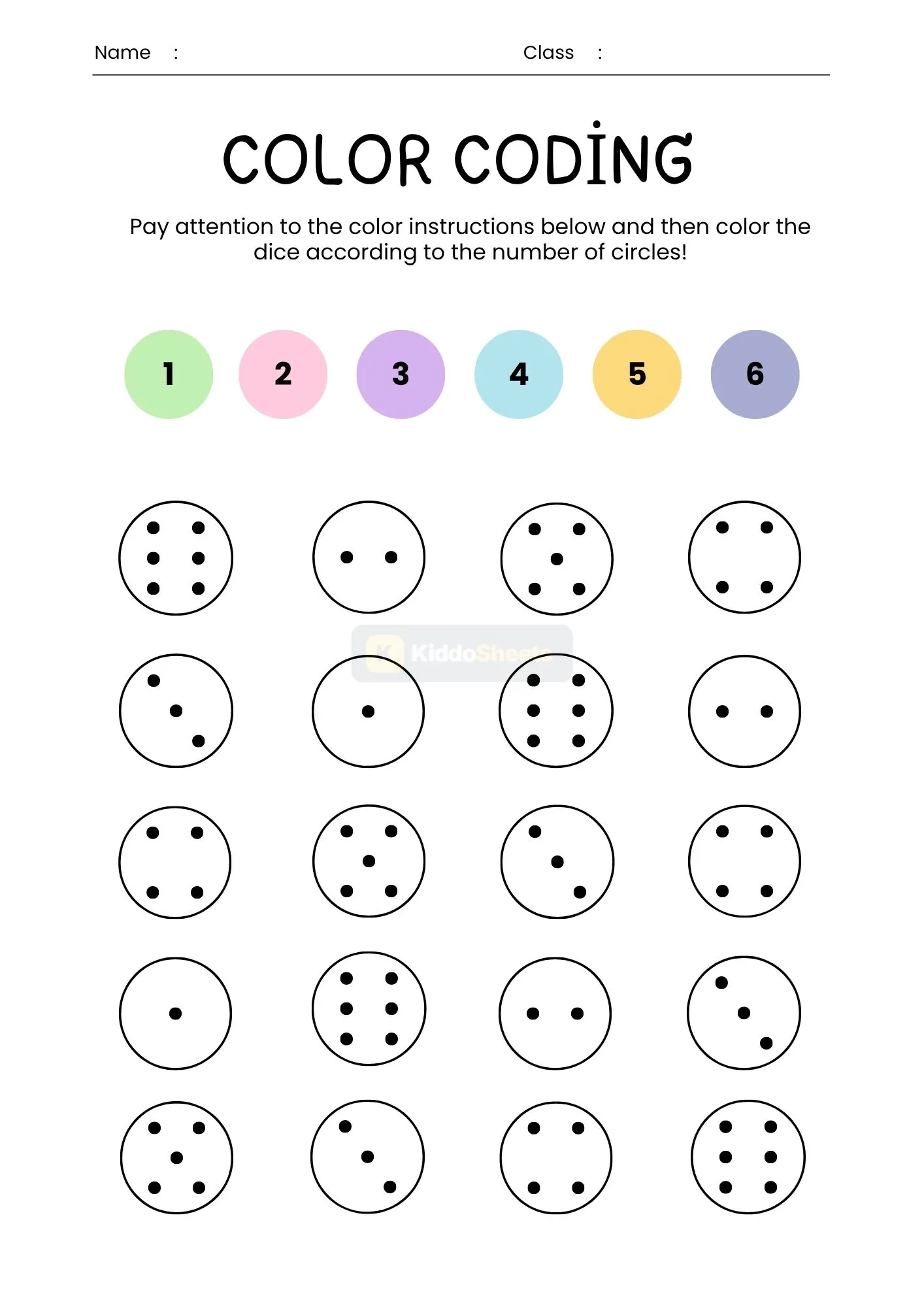
Board games with dice deserve a special mention. Counting the dots, then counting spaces on the board, is addition practice your child won't even notice.
Signs your child is ready for more
You'll know it's time to stretch when your child:
- Answers small sums without counting every object
- Starts counting on from the larger number on their own
- Explains their thinking ("I know 4 and 1 is 5 because 5 comes after 4")
- Asks for "harder ones"
At that point, try sums up to 20 or introduce simple take-away stories. When subtraction comes along, our post on fun ways to practice subtraction at home has plenty of game ideas. You can also browse all of our math worksheets or number worksheets by age.
The bottom line
Early addition grows out of solid counting and lots of hands-on combining. Start with real objects, move to picture problems like counting and adding stars, and introduce symbols only when the idea already makes sense. Keep sums within 10, keep sessions short and keep it playful. Your preschooler will be adding before either of you notices the switch.