Skip Counting for Kids: Teaching Counting by 2s, 5s and 10s
A practical guide to teaching skip counting by 2s, 5s and 10s, with hands-on activities, songs, number patterns and tips for moving toward multiplication.
Counting one by one works fine for a handful of toys. But when a child has to count forty socks, sixty pennies or a hundred stickers, counting by ones gets slow and easy to lose track of. Skip counting, which means counting by 2s, 5s or 10s, is the shortcut. It's also one of the most useful stepping stones toward multiplication, telling time and working with money.
Most children are introduced to skip counting in kindergarten or first grade, and they keep using it for years. Here's how to teach it so it actually makes sense, rather than just being a chant your child memorizes.
What skip counting really is
Skip counting means adding the same number over and over. When a child counts "2, 4, 6, 8," they're adding 2 each time. When they count "5, 10, 15, 20," they're adding 5.
That's the key idea to keep coming back to: each number is the one before plus the same amount. Children who understand this can figure out the next number even if they forget the chant, and they're better prepared for number patterns with bigger or trickier rules later on.
Which order to teach
Most kids find this order comfortable:
- Counting by 10s. The pattern is very clear (10, 20, 30, 40) and connects directly to place value.
- Counting by 5s. The numbers always end in 5 or 0, which is easy to spot.
- Counting by 2s. This links to even numbers and to counting pairs.
- Counting by 3s and 4s. These come later and are good preparation for times tables.
There's no strict rule here. If your child is fascinated by pairs of shoes, starting with 2s is perfectly fine.
Make it physical first
Before writing anything down, let your child skip count real objects. Seeing and touching groups makes the idea concrete.
- Pairs of socks. Match socks into pairs and count "2, 4, 6..." as you set each pair down.
- Fingers and toes. Hold up hands one at a time and count by 5s.
- Coins. Nickels are perfect for counting by 5s and dimes for counting by 10s.
- Building blocks. Make towers of 10 blocks and count the towers by 10s.
- Snacks. Put crackers in groups of 2 or 5 on a plate before eating them.
Ask your child to check their skip count by counting the objects one by one afterward. Seeing that both methods give the same answer is a powerful moment.
Use a hundred chart
A hundred chart is one of the best tools for skip counting because it makes the patterns visible. Print or draw a 1–100 grid and have your child color every number they land on.
- Counting by 10s colors the last column, straight down.
- Counting by 5s colors two columns.
- Counting by 2s makes a striped pattern across the whole chart.
Ask questions as they go: "What do you notice about the numbers you colored?" "What do all the numbers in the 5s column end with?" These conversations build number sense far more than repetition alone.
Add rhythm and movement
Skip counting sticks better when the body is involved. Try:
- Jumping on every number while whispering the ones in between ("one, two, three, four").
- Clapping on each skip-counted number.
- Bouncing a ball and counting by 5s with each bounce.
- Counting by 10s while walking up stairs, one step per number.
Simple counting songs are fine too, as long as you also practice without the tune so your child can count on their own.
Practice with number patterns
Once your child is comfortable counting by 2s, 5s and 10s from zero, stretch their thinking:
- Start at a different number. Count by 10s starting at 3: 3, 13, 23, 33.
- Count backward. 50, 45, 40, 35.
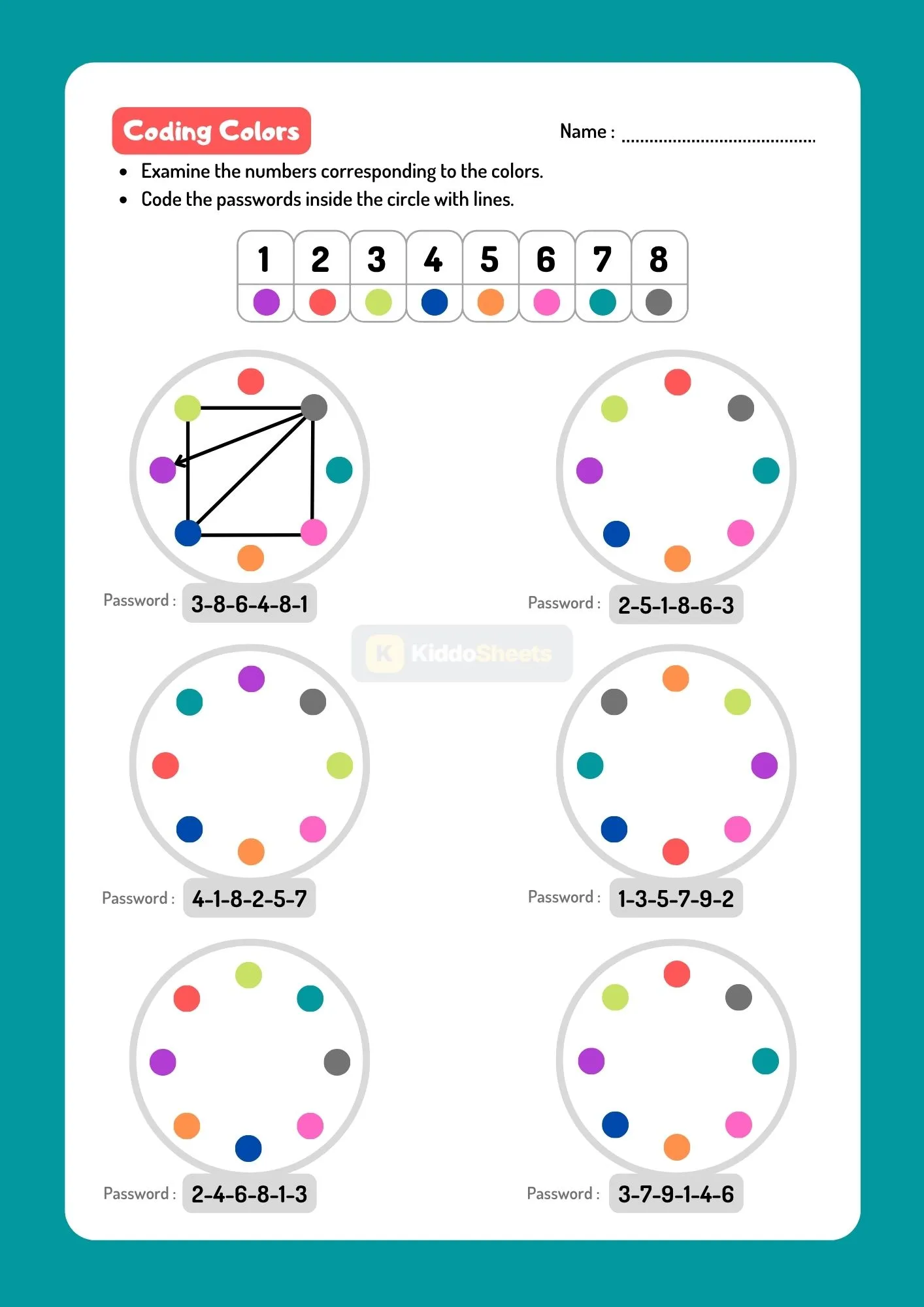
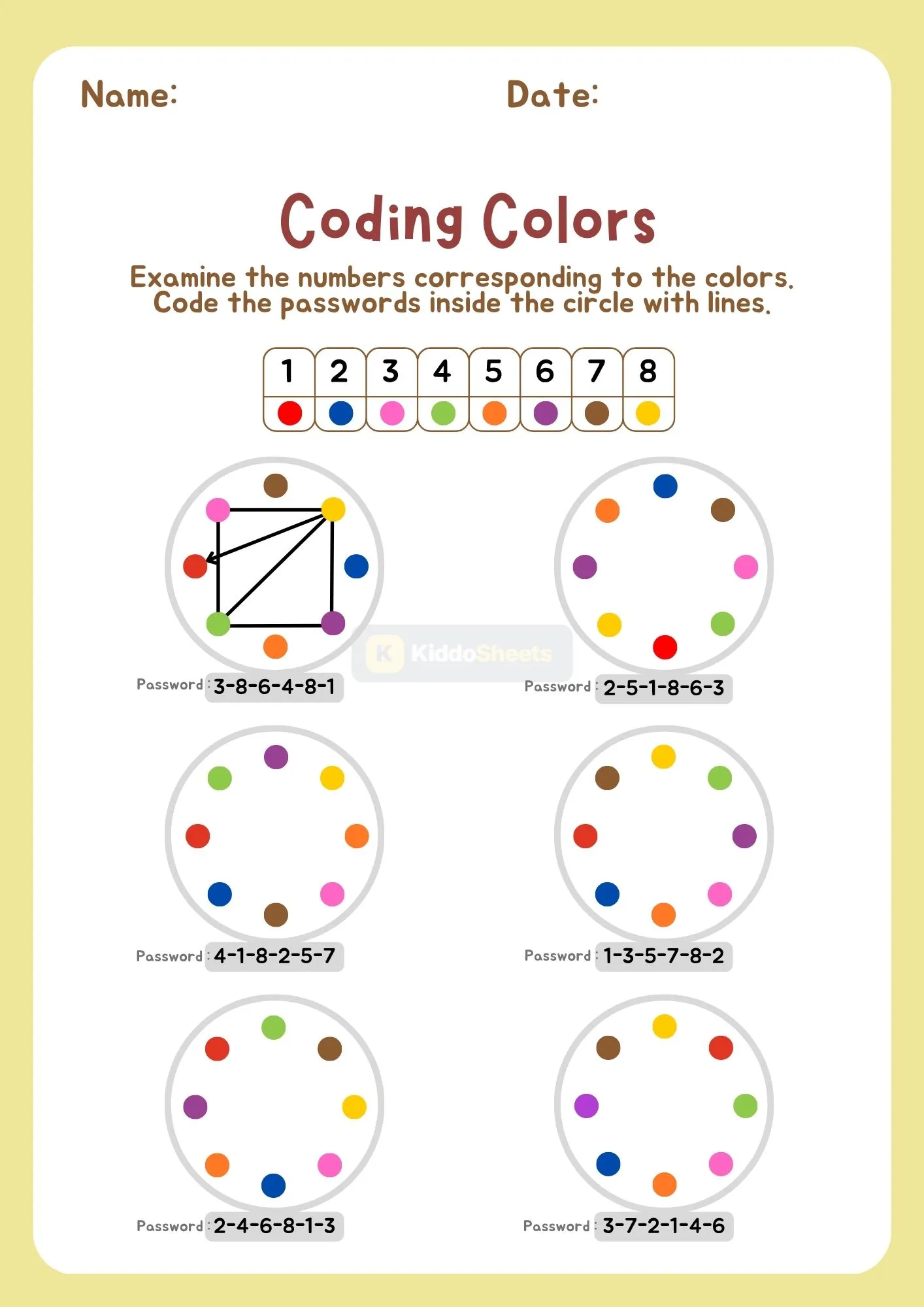
- Fill in the gaps. Write a sequence with missing numbers, like 20, 25, __, 35, __, and let your child find them.
- Find the rule. Show a sequence and ask, "What's being added each time?"
That last one is where skip counting turns into real pattern thinking. Older kids who are ready for a challenge can try our Number Patterns Challenge Worksheet, which mixes steady addition with rules that grow or multiply. It's aimed at ages 9–11, so younger children may enjoy it with an adult helping.
For more about patterns in general, see our post on pattern activities for kids.
Connect it to real life
Skip counting becomes meaningful when kids see it used outside of math time:
| Skip count | Everyday use |
|---|---|
| By 2s | Counting pairs of shoes, eyes, wheels on bikes |
| By 5s | Reading minutes on an analog clock, counting nickels |
| By 10s | Counting dimes, bundles of straws, fingers on many hands |
Telling time is a great example. Each number on a clock face marks 5 minutes, so counting by 5s is exactly how kids figure out "twenty past." Our Telling Time to 5 Minutes Worksheet puts that skill to work.
For general addition practice with groups, the Count and Add Stars Worksheet is a gentle option for younger kids. You'll find more in the Numbers worksheet collection.
Common stumbling blocks
A few things trip kids up regularly:
- Crossing a hundred. Counting by 10s past 100 (100, 110, 120) can be confusing. Use blocks or money to show what's happening.
- Losing their place in 2s. Keep a hundred chart nearby as a reference.
- Rushing the chant. Some kids can say "5, 10, 15, 20" fast but can't start from 35. Practice starting from different points.
If your child gets stuck, go back to real objects. There's no shame in counting socks again.
Building toward multiplication
Skip counting is the foundation for multiplication. Once a child can count by 5s, they already know that four groups of 5 make 20. When the time comes, you can say, "Remember counting by 5s? Multiplication is just a faster way to write that."
The bottom line
Skip counting helps children count faster, see number patterns and prepare for multiplication, time and money. Start with 10s and 5s, use real objects and a hundred chart, add movement, and then challenge your child to find rules in number sequences. A few minutes a day is enough to make it stick.