10 Fun Ways to Practice Subtraction at Home (No Flashcards Needed)
Subtraction clicks faster when kids can see and touch it. Try these 10 playful, low-prep subtraction activities for ages 5 to 8, plus free printable practice pages.
Addition usually feels natural to kids: you have some, you get more, now you have lots. Subtraction is trickier. "Taking away" is harder to picture, and the moment it turns into rows of abstract problems, many children start counting on their fingers and guessing.
The good news: subtraction becomes much easier when kids see it, touch it and play with it before they write it. Here are ten ideas you can do at home with things you already have.
1. Snack subtraction
Put 10 crackers on a plate. Ask: "If you eat 3, how many are left?" Let them eat and count. Then write it down together: 10 − 3 = 7. It's hard to find a more motivating math manipulative than food.
2. Bowling pins
Set up 10 plastic bottles. After each roll, count the pins that fell and the ones still standing. "10 pins, 4 fell down, 6 are left." Kids get to move, and every turn is a new subtraction problem.
3. Hide-and-seek counters
Place 8 buttons on the table, then cover some with a cup while your child closes their eyes. "There were 8, now I can see 5. How many are hiding?" This is subtraction and missing-number thinking in one game.
4. Number line hops
Draw a number line from 0 to 20 with chalk outside or tape on the floor. Start on a number and hop backwards: "Start on 12, hop back 4. Where did you land?" Kids feel that subtraction means moving down the number line.
5. Ten-frame "parking lot"
Draw two rows of five boxes (a ten-frame) and use toy cars. Park 9 cars, then 3 drive away. Seeing the empty spaces next to the full ones helps kids recognise facts like 10 − 3 without counting one by one.
6. Domino differences
Pick a domino and subtract the smaller side from the larger one. Whoever gets the bigger difference keeps both dominoes. Fast, competitive, and great for fact fluency.
7. Card war, subtraction edition
Each player flips two cards and subtracts the smaller from the larger. Highest answer wins the round. Remove face cards for younger kids.
8. Shopping with coins
Give your child 20 cents (or 20 paper "coins") and a mini store with price tags. "You have 20, the apple costs 7. How much do you have left?" This connects subtraction to real life.
9. Story problems about their day
Make up word problems with your child as the hero: "You had 15 stickers and gave 6 to your sister. How many do you have now?" Personal stories make kids far more willing to solve them.
10. Color-by-answer worksheets
When it's time for paper practice, make it feel like a puzzle. In color-by-answer sheets, each correct answer reveals part of a picture, so kids naturally check their own work. Try Coloring the Hexagon by Subtraction Results.
When to move to written practice
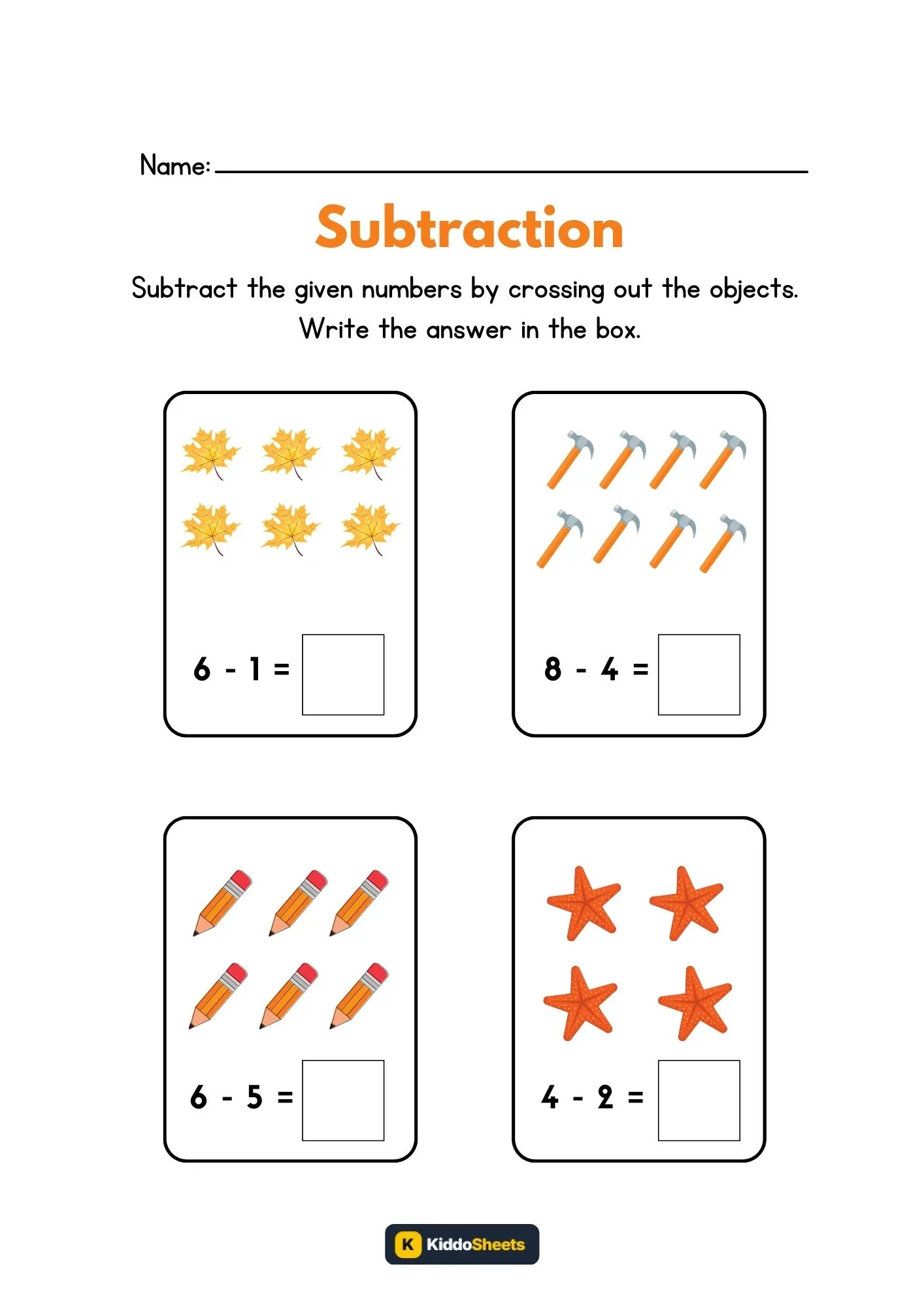
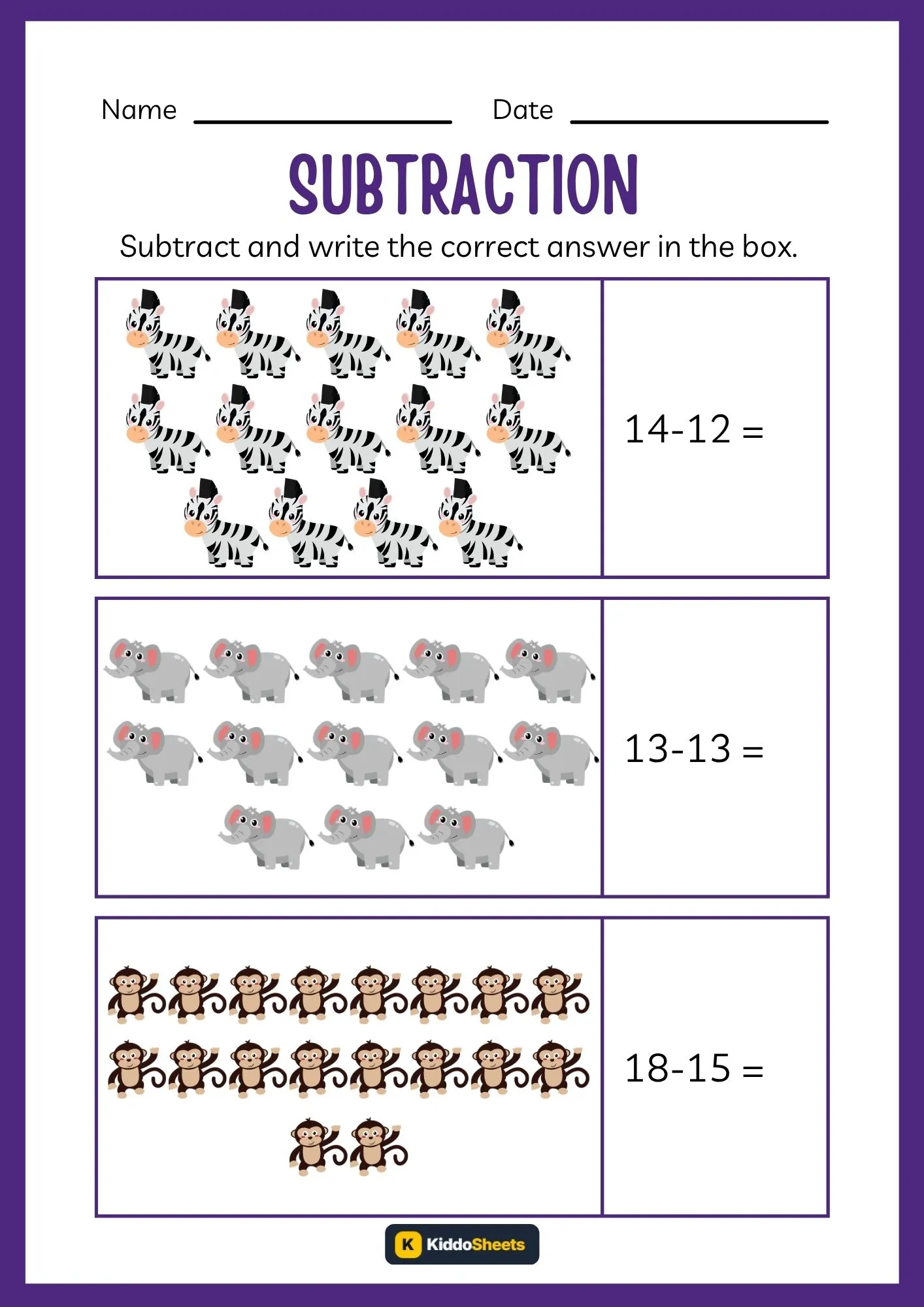
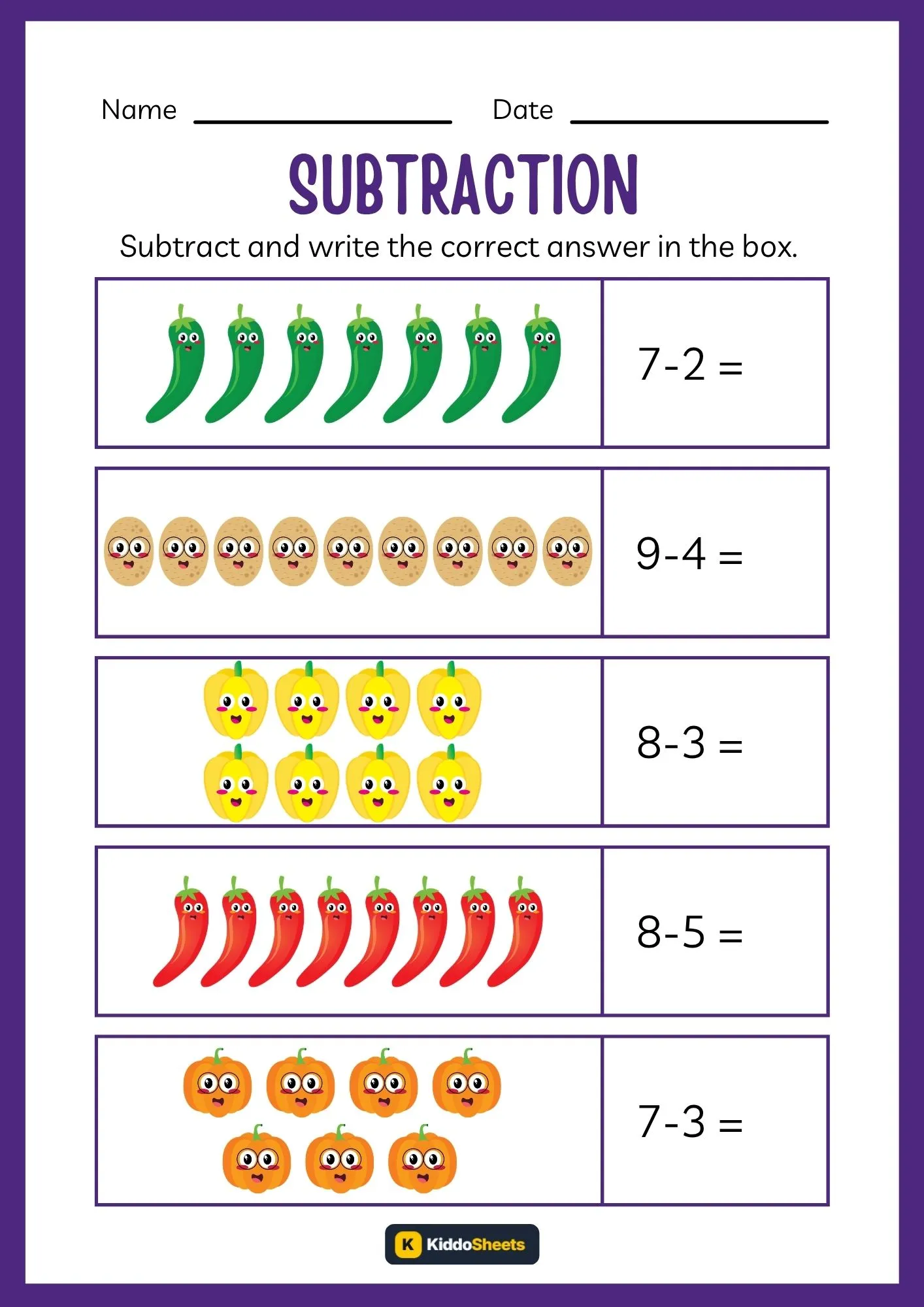
Once your child can solve subtraction with objects and explain what they did, short written practice helps build speed and confidence. Our Subtract and Write the Correct Answer series gives steady, focused practice. Keep sessions to one page at a time and mix in the games above.
Common sticking points (and quick fixes)
- "I always count on my fingers." That's fine at first. Encourage "counting back" from the bigger number instead of counting everything from 1.
- Mixing up + and −. Before solving, ask your child to say the sign out loud: "minus means take away."
- Big number first? Show with objects that you can't take 7 away from 3 (yet!), so the bigger number goes first in early problems.
- Losing interest. Switch back to a game for a few days. Confidence matters more than speed.
The bottom line
Subtraction sticks when kids experience it before they write it. Mix hands-on games with short, satisfying worksheets, and celebrate progress. Browse more free math worksheets to keep the practice varied.