Pattern Activities for Kids: Why Patterns Are the Secret to Early Math
Spotting and continuing patterns is an early step toward math thinking. See which patterns kids master from age 3 to 8, with activities and free worksheets.
Red, blue, red, blue... what comes next? It looks like a simple question, but when a child answers it, they're doing something very mathematical: noticing a rule and using it to predict what happens next.
That's why patterns show up everywhere in early childhood education. Being able to recognise, copy and extend patterns lays groundwork for counting, skip counting, multiplication and even algebra later on.
Why patterns matter
- They build prediction skills. Kids learn that the world follows rules they can figure out.
- They support counting and number sense. Skip counting (2, 4, 6, 8...) is a number pattern.
- They develop attention to detail. To continue a pattern, a child has to notice colour, shape, size and order.
- They connect to reading. Rhymes, repeated phrases and predictable books are language patterns.
Types of patterns, from easiest to hardest
AB patterns (age 3+)
Two things alternating: 🍎🍌🍎🍌. Start here with real objects like blocks, toy cars or snacks.
AAB and ABB patterns (age 4+)
Something repeats twice before the change: ⭐⭐🌙⭐⭐🌙. Children need to hold a slightly longer rule in mind.
ABC patterns (age 4–5)
Three different items in a cycle: 🔴🟢🔵🔴🟢🔵.
Growing patterns (age 5–7)
Each step gets bigger: 1 block, 2 blocks, 3 blocks... This is where patterns start to look like numbers.
Number patterns (age 6–8)
Counting by 2s, 5s and 10s, or spotting a rule like "add 3 each time." Kids can also look for patterns in a hundred chart.
Pattern codes and puzzles (age 7+)
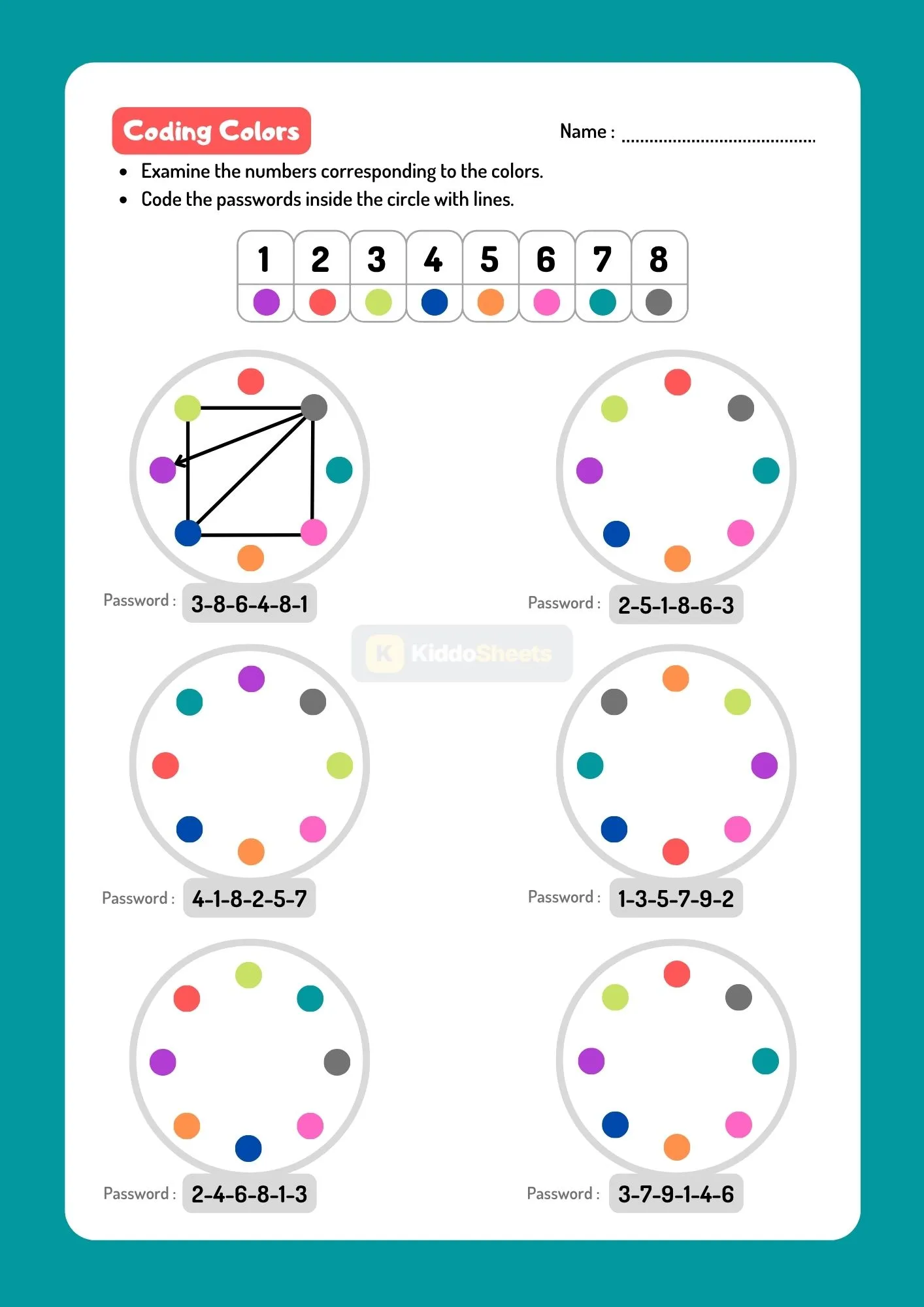
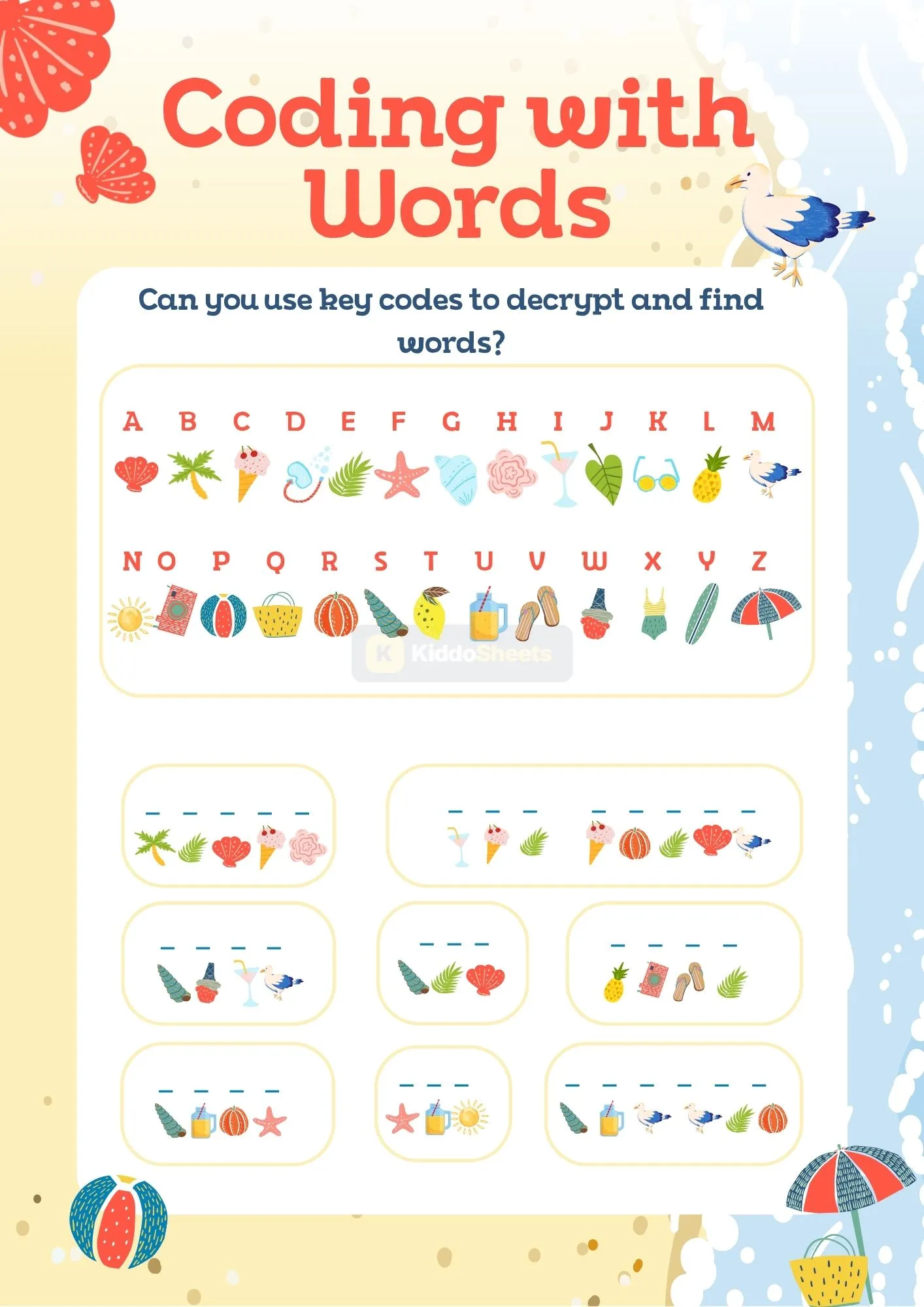
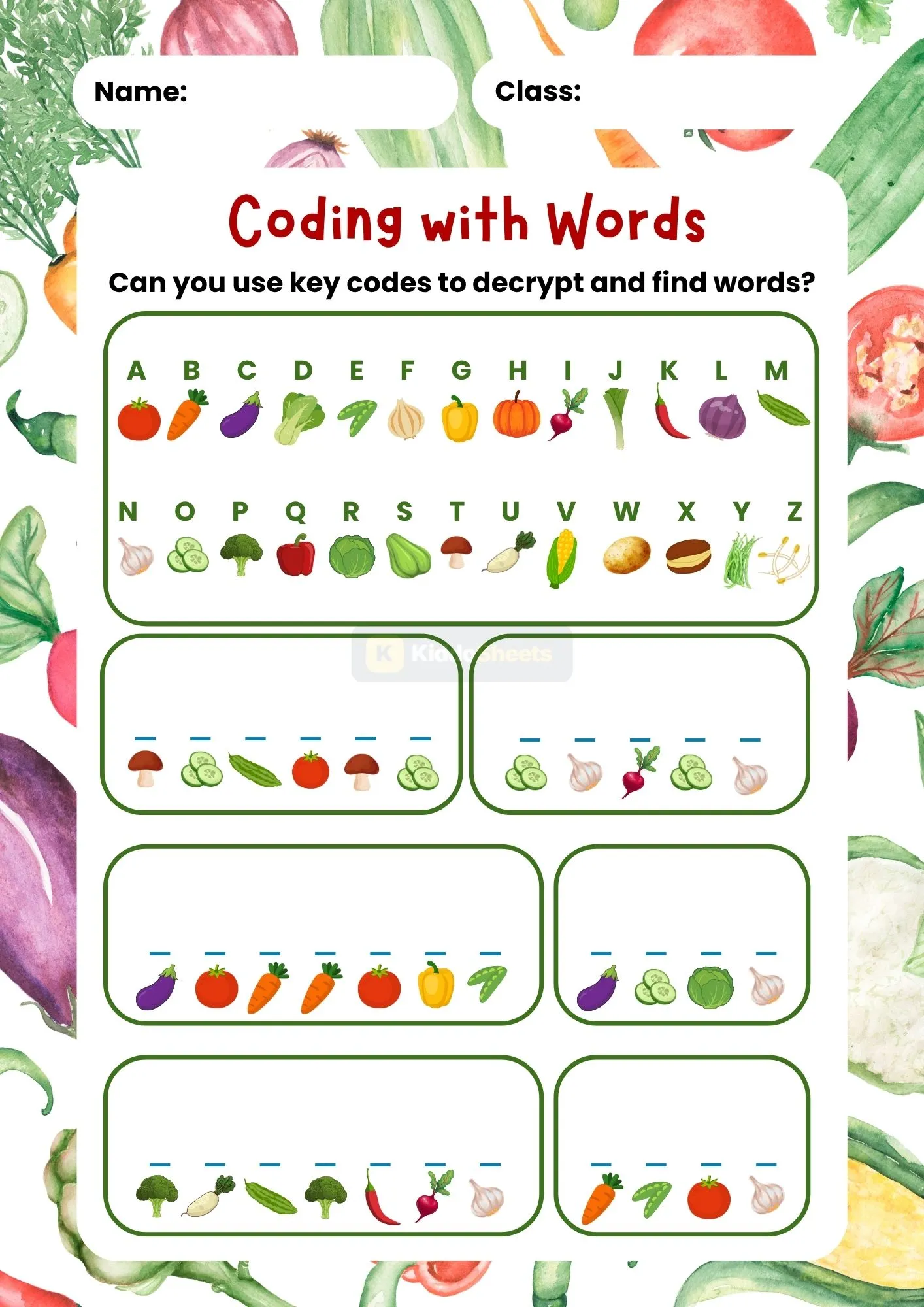
Decoding a message where each symbol stands for a letter, or finding coordinates on a grid, takes pattern thinking to the next level. Try Decrypt the Words Worksheet 1 or Find the Coordinates Worksheet 1.
8 easy pattern activities at home
- Snack patterns: grape, cracker, grape, cracker. Eat the pattern when done!
- Bead necklaces: string beads in a pattern, then ask your child to describe the rule.
- Clap and stomp: clap, clap, stomp, clap, clap, stomp. Patterns don't have to be visual.
- LEGO towers: build a tower with a colour pattern and have your child copy it.
- Pattern walks: look for patterns on fences, tiles, clothes and leaves.
- "Fix my mistake": make a pattern with one error and let your child find it.
- Create-your-own: let kids invent a pattern and challenge you to continue it.
- Cut and glue: cut out shapes and glue them in the right order. Our Find the Patterns Cut and Glue series is perfect for this.
Tips for teaching patterns
- Say the pattern out loud. "Red, blue, red, blue." Hearing the rhythm helps.
- Show at least two full repeats before asking what comes next.
- Ask "how do you know?" Explaining the rule is as important as getting the answer.
- Change only one thing at a time. Start with colour patterns, then shapes, then size.
The bottom line
Patterns are a playful way into big math ideas. Start with simple AB patterns using real objects, move up to longer and growing patterns, and use worksheets to practise. Find more in our free pattern worksheets and shape worksheets.