Fine Motor Skills for Preschoolers: Simple Ways to Build Strong Hands
Simple, low-cost activities that strengthen little hands for writing, cutting and buttoning, plus how printable tracing and maze pages fit into the routine.
Before a child can write their name neatly, they need hands that can do the job. Fine motor skills are the small, precise movements of the fingers, hands and wrists. They're what make it possible to hold a pencil, snip with scissors, zip a coat or open a snack bag.
The best part is that these skills grow through play. You don't need special equipment or long lessons, just a steady supply of activities that ask little fingers to pinch, squeeze, twist and guide.
Why fine motor skills matter for school
Many early classroom tasks depend on hand control:
- Holding a crayon or pencil without tiring quickly
- Coloring inside a shape
- Cutting along a line
- Gluing small pieces in place
- Turning book pages one at a time
- Managing buttons, zippers and lunch containers independently
When these tasks feel easy, a child can focus on what they're learning instead of fighting with the tools. When they feel hard, kids may avoid drawing and writing altogether. Building hand strength early helps prevent that cycle.
The building blocks
It helps to think of fine motor development in a few layers:
| Skill | What it looks like | Everyday practice |
|---|---|---|
| Hand strength | Squeezing, pushing, pulling | Play dough, spray bottles, tongs |
| Pincer grasp | Thumb and pointer working together | Picking up cereal, beads, stickers |
| Finger isolation | Moving one finger at a time | Finger puppets, pointing, poking holes in dough |
| Bilateral coordination | Two hands doing different jobs | Holding paper while cutting, stringing beads |
| Hand-eye control | Guiding a tool along a path | Tracing, mazes, coloring |
Work on the bottom layers first. A child who hasn't built hand strength will find tracing tiring no matter how many worksheets you print.
Play-based activities that strengthen hands
These ideas use things most homes already have:
- Play dough everything. Roll snakes, pinch tiny balls, press in buttons, cut with a plastic knife. Dough is one of the most useful fine motor tools there is.
- Tong transfers. Move pom-poms, cotton balls or small blocks from one bowl to another with kitchen tongs or clothespins.
- Sticker peeling. Peeling stickers off a sheet works the pincer grasp. Let your child place them along a drawn line for extra challenge.
- Bead stringing. Start with large beads on a pipe cleaner, then move to smaller beads on yarn.
- Spray bottle painting. Fill a spray bottle with water and let your child "paint" the fence or a sidewalk drawing. Squeezing the trigger builds grip strength.
- Tearing paper. Tearing scrap paper into strips for a collage is surprisingly good work for the small muscles of the hand.
- Coin slots. Cut a slit in a container lid and have your child push coins or buttons through (with supervision, since small objects can be a choking risk).
- Kitchen help. Stirring, pouring, spreading and sprinkling all count.
Where printables fit in
Once your child has some hand strength, paper activities give them a focused way to practice control. They work best as short sessions, about five to ten minutes, rather than long sit-down blocks.
Some good options:
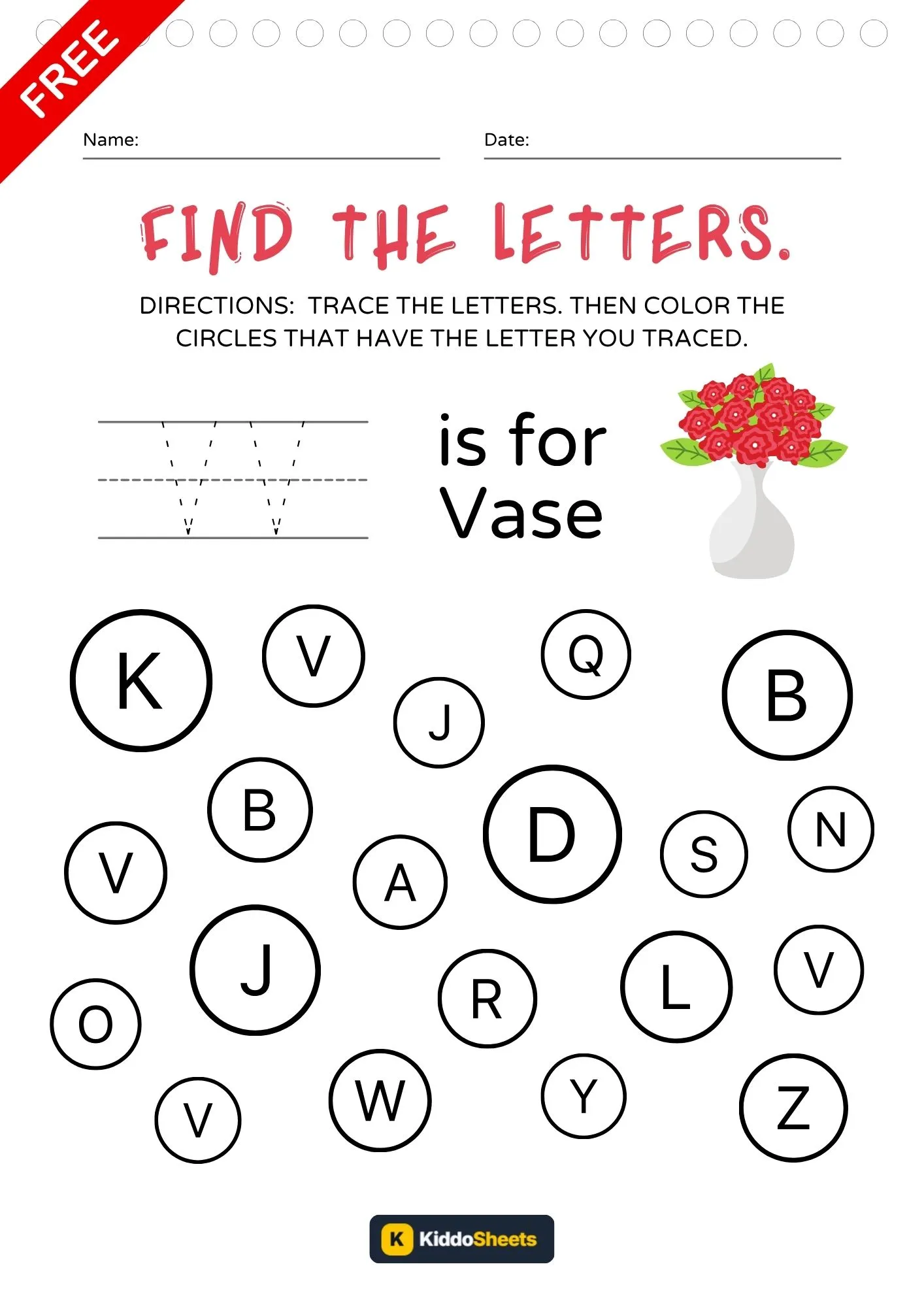
- Tracing pages. Following dotted lines and letter shapes builds the path-guiding control used for writing. Our Trace and Coloring the Letters V page combines tracing with coloring, which keeps it varied.
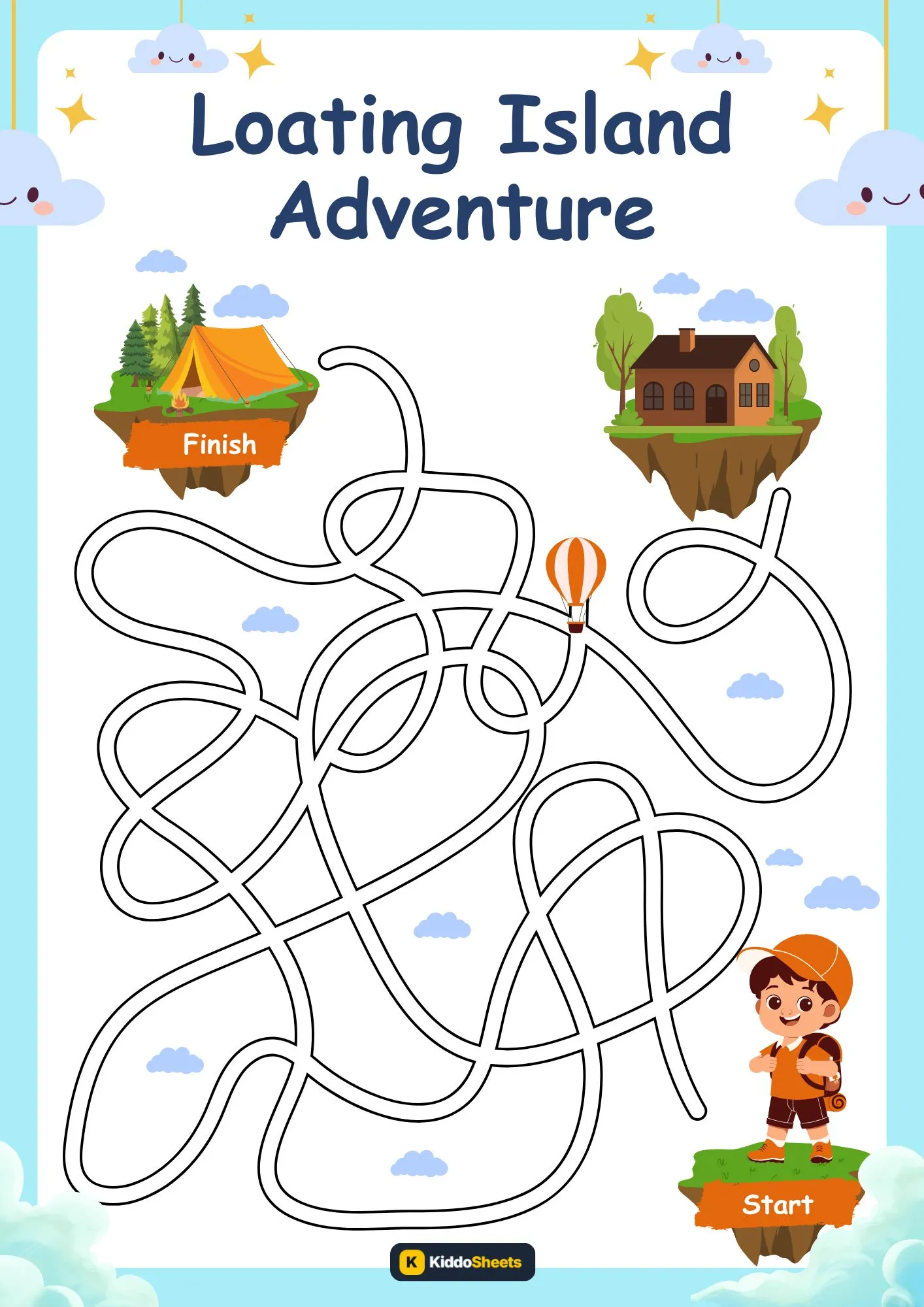
- Simple mazes. Steering a crayon through a maze without touching the walls is excellent hand-eye practice. Easy picture mazes like the Bee and Flower Maze are a gentle start for this age.
- Cut and glue activities. Cutting out shapes and gluing them in order works both hands together. The Find the Patterns Cut and Glue Worksheet adds a bit of pattern thinking too.
- Coloring. Coloring a large picture strengthens endurance; coloring small areas builds precision.
If your child is still working toward letters, the pre-writing stroke ideas in our post on getting ready to write make a nice next step.
Make paper practice easier
Small tweaks can make worksheets more successful for young kids:
- Use short crayons. Broken crayons and golf-pencil-sized tools naturally encourage a better grip than long, skinny ones.
- Work on a vertical surface. Tape a page to the wall or an easel. Working upright helps position the wrist well.
- Tape the paper down. If your child struggles to hold the page steady, a bit of tape removes one challenge.
- Go big first. Trace a path with a finger, then with a chunky marker, then with a crayon.
- Stop while it's still fun. End on a success rather than pushing through fatigue.
A simple weekly plan
You don't need to schedule fine motor practice like a class, but a loose rhythm helps make sure it happens:
- Daily: one play-based hand activity (dough, tongs, beads, kitchen help)
- Three times a week: one short paper activity (tracing, maze, coloring or cut and glue)
- Anytime: self-care practice, like buttons, zips and opening containers
Rotate activities so nothing gets stale, and let your child pick from two options to keep them invested.
When to ask for advice
Every child develops at their own pace, and a wide range is normal. If you have ongoing concerns about how your child uses their hands, talk with their teacher or your pediatrician, who can look at the full picture.
The bottom line
Strong, skilled hands come from lots of playful practice: squeezing dough, picking up tiny objects, stringing beads and helping in the kitchen. Add short, well-chosen printables like tracing pages, beginner mazes and cut-and-glue activities once your child has some hand strength. You can browse our tracing worksheets for more ideas. A few minutes a day adds up to a child who's ready to draw, cut and write with confidence.